
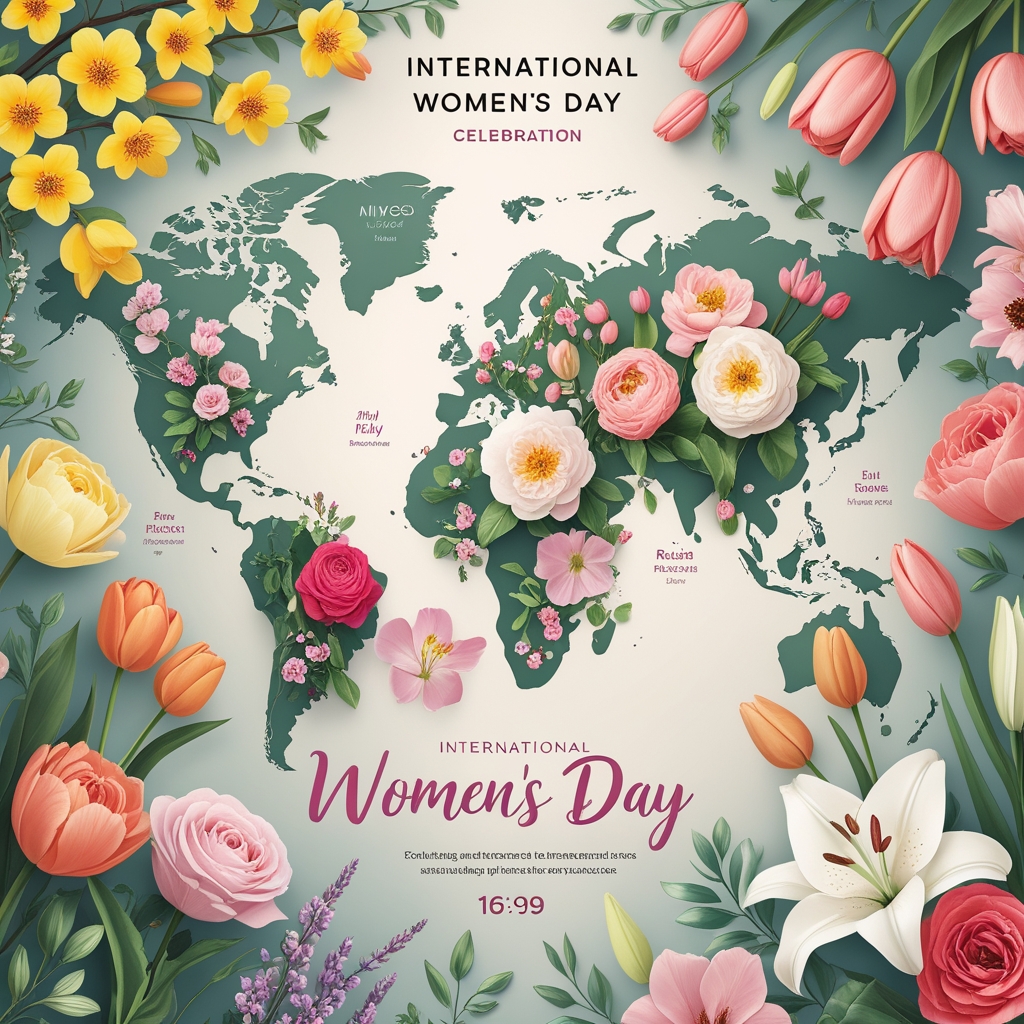
8th March rolls around every year to give a global shout-out to women’s rights, achievements, and their sheer awesomeness. Several gifts are exchanged during International Women’s Day (IWD), but nothing says, “you’re a powerhouse” quite like a bouquet.
Gorgeous bouquets have been the go-to gift worldwide, turning this day into a floral frenzy. IWD’s flower symbol is not the same globally. Why? Because of the differences in botanical traits, historical origins, and culture.
What’s more, IWD, unlike Mother’s Day or Valentine’s Day, has no unified floral symbol. Each continent celebrates diverse women’s experiences and honors them authentically. So this article will globe-trot through different places, uncovering which blooms different countries prefer. Let’s tap into it!
Europe’s Blooming Bonanza
Europe is the OG of IWD flower traditions. However, European countries don’t have uniformity when it comes to celebrating women. Each country has its own floral flair.
Italy
Italy is the land of pasta, passion, and mimosa-obsessed people. It all started in 1946, when Italian feminists from the Union of Italian Women chose Acacia dealbata (yellow mimosa) as an IWD symbol. Since then, mimosas have become an emblem for celebrating women.
Why mimosas if you ask? These bright yellow puffballs bloom bright in early March and are tough as nails. Hence, perfectly mirrors women’s resilience.
Plus, 8th March in Italy is also called Festa della Donna, where men give bouquets to their favorite ladies, i.e., wives, moms, girlfriends, and colleagues. Ladies also give gifts to each other. On this day, streets buzz with pop-up stands, and bakeries include mimosas-inspired cakes on their menu.
Russia
Hopping over to Russia, where IWD is a public holiday. Schools and banks close, and women are usually given half days. Flower shops are bursting with beautiful blooms, and men go all out, gifting stunning bouquets to every woman in their orbit.
Moreover, the top picks in Russia are tulips (especially red and yellow) and roses. Why these flowers? Because tulips scream renewal, while roses symbolize gratitude and admiration.
Women’s Day in Russia has become more of a rom-com. Individuals host family feasts, and guys panic-buy blooms and pair them with chocolates.
Romania and Eastern Europe
Like Russia, red tulips and roses rule Romania on IWD. Men honor their moms, grandmothers, wives, colleagues, and other female friends with flowers and cards. Plus, this heartfelt day is celebrated in a low-key manner, i.e., exchanging gifts and schools hosting events where students craft floral gifts.
Besides Romania, Bulgaria and Ukraine also joined the mimosa party along with tulips on IWD. It is considered a national holiday where women receive chocolates, bouquets, and heartfelt gifts from family and colleagues. These places also host parades, celebrations at workplaces, organize school performances, and families gather for festive meals.
Asia’s Petal Power
Asia celebrates IWD in spectacular fashion, and for them, this day is less about romance and more about empowerment.
China
IWD was officially cemented in China in 1949, and since then, women have been getting half-days off work by law and showered with flowers and gorgeous bouquets. The top flowers in China include roses and carnations, as they signify gratitude and love.
Moreover, sales on different brands make IWD even more special. You’ll find skincare, clothes, and makeup at discounted prices. Plus, families celebrate this day with special meals.
Vietnam
Vietnam honors female veterans and moms on IWD. Floral tributes are massive on this day, and the most popular flowers include orchids, lilies, and tulips, which signify resilience and dignity. Like the other places, Vietnam also celebrates women in a similar manner.
Men surprise women with flowers and chocolates, schools organize activities, and workplaces host special events, dinners, and performances honoring women.
Kazakhstan and Central Asia
Yellow and red tulips dominate Kazakhstan and Central Asia, and this public holiday revolves around cultural events and gift-giving. This national holiday features grand festivities, elaborate concerts, parades, workplace celebrations, floral displays, and family gatherings.
Latin America’s Vibrant Vistas
Latin America amps up IWD with activism and color. Gift-giving is coupled with protests to remind the nation about women’s sacrifices.
Brazil
IWD is usually celebrated with protests, women’s rights rallies, and gender equality marches. Workplaces host discussions and events. The city brims with gerbera daisies and sunflowers. Like other places, women also receive flowers, gifts, and social media tributes.
Chile and Argentina
Both countries celebrate IWD with protests, marches, and strikes. The Ni Una Menos or Not One (Woman) Less movement in Argentina demonstrates an end to gender-based violence, while Brazil hosts concerts, cultural events, and women’s rights campaigns.
What’s more, both nations combine activism and celebration to honor women. Gifts and flowers (especially lilies and red carnations) are given.
Africa’s Empowerment Echoes
Celebrations of IWD in Africa are quite different, and flowers symbolize hope among the challenges they face on a daily basis.
South Africa and Beyond
This day is a national public holiday where women wear their national attire. Community events and speeches highlight gender equality, and organizations host empowerment workshops. This day is deeply political and celebratory. Plus, lilies, sunflowers, roses, and orchids are the most popular among the African continent.
Final Thoughts
We have globe-trotted from mimosas in Italy to tulips in Russia, proving that flowers are not just pretty they are powerful symbols showcasing women’s strength worldwide. With these cultural traditions, giving bouquets, and activism reminds us that IWD is about appreciation.